Is attiéké healthy?
Written by Juliana Dosy, M.Sc., nutrition coach · Updated
Question received 4 November 2026 — "I grew up on attiéké and grilled fish — it's my comfort food. But now people tell me it's heavy and makes you gain weight. Should I stop?"
In this article
Short answer
Attiéké can be part of a balanced meal with fish and vegetables. It is a fermented cassava starch, not a complete meal on its own. It does not cause weight gain by itself: weight change depends on overall intake, serving size, accompaniments and other factors.
No, and here's why, before we even get to calories. Attiéké is fermented cassava. You grate the root, let it ferment, press it, roll it into small granules, and steam it. That one detail — fermented, steamed, not fried — matters a lot. Without added oil, it is generally low in fat. It's a starch, carb-dense like everything from cassava, but hydrated by the steaming, so it's less calorie-dense per gram than dry gari or cassava flour.
What matters is the portion and what's on the plate
Serving size matters. Attiéké provides mainly carbohydrate, with relatively little protein and fibre. A large serving provides more calories than a small one; fullness varies with the person and the whole meal. We cannot predict that everyone will be hungry two hours later.
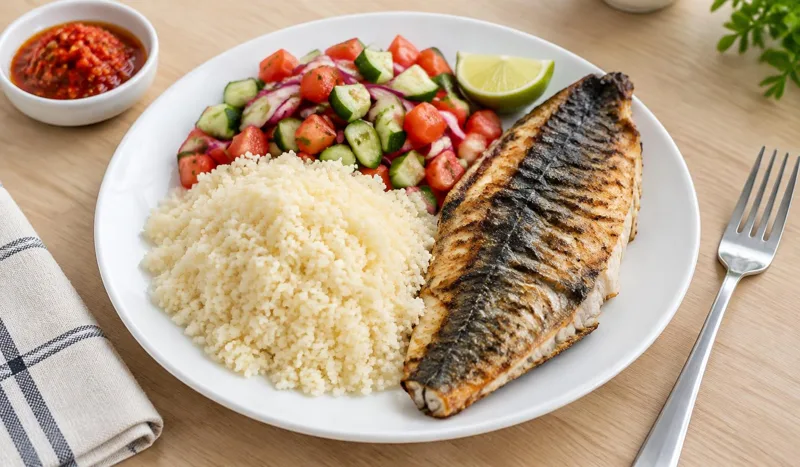
Attiéké with grilled fish, vegetables and a little pepper can form a balanced meal: fish provides protein and vegetables provide fibre. An oil-rich sauce or fried fish can increase energy intake. Calories come from the whole meal, including the attiéké, not only the oil.
The fermentation is a quiet plus
Fermentation gives attiéké its slightly sour taste. Gari is fermented too: a key difference is that attiéké is steamed while gari is roasted. Fermentation does not guarantee easier digestion or lower blood sugar. One small study in adults without diabetes measured a GI of 63 for the attiéké tested, but also a high glycemic load for the studied serving. This is not a universal result and does not establish that fermentation alone caused the response.
Attiéké made only from cassava is naturally gluten-free. With coeliac disease, check the product, ingredients and risk of cross-contact. Digestive tolerance is individual; attiéké cannot be assumed to be low FODMAP or better tolerated than other starches based on cassava alone.
If you live with diabetes, discuss servings, accompaniments and blood-sugar monitoring with your care team. Attiéké remains a carbohydrate source: neither automatically off-limits nor a food whose fermentation guarantees a protective effect.
What I'd tell you
Keep your attiéké and fish if you enjoy it. Choose a serving suited to your needs, put fish and vegetables alongside, and enjoy it. A dish that connects you to home can belong in a balanced diet: nutrition does not have to erase your cooking.
To go further, read our cassava nutrition guide.
Frequently asked questions
Is attiéké healthy?
Attiéké can be part of a balanced meal with fish and vegetables. It is a fermented cassava starch, not a complete meal on its own. It does not cause weight gain by itself: weight change depends on overall intake, serving size, accompaniments and other factors.
What is attiéké?
Attiéké is a fermented cassava couscous from Côte d'Ivoire. Grated cassava is fermented, pressed, rolled into small granules and steamed, giving it a light, slightly sour taste. It's a staple of Ivorian cooking, classically served with grilled fish.
Does attiéké make you gain weight?
Not by itself. It is a carbohydrate-rich food, generally low in fat without added oil. Serving size and accompaniments affect energy intake; no serving guarantees or prevents weight gain.
How many calories are in attiéké?
There is no single value. A study of different Ivorian attiéké preparations reported about 123–184 kcal per 100 g of prepared product. Water content, variety and recipe affect the value; check your product's label and distinguish moist attiéké from dry products. Serving size and additions matter too.
Is attiéké good for diabetics?
It is not automatically off-limits, but it remains a carbohydrate source. The serving, recipe and whole meal matter. Discuss suitable choices and blood-sugar monitoring with your care team.
Is attiéké gluten-free?
Attiéké made only from cassava is naturally gluten-free. With coeliac disease, still check the label, ingredients and risk of cross-contact.
Notice
This content is informational and does not replace medical advice. For a personalized eating plan, especially with diabetes, the platform offers consultations with registered dietitian-nutritionists who are members of Quebec's Ordre professionnel des diététistes-nutritionnistes (ODNQ).
Read next
- Does cassava make you gain weight?
Portions, your plate, and what causes weight gain.
- Cassava, glycemic index and diabetes
Preparation and serving size matter.
- Cassava: nutrition and benefits
Fibre, carbohydrates, and what cassava provides.
References
- Physico-chemical and biochemical characteristics of improved cassava varieties in Côte d’Ivoire. 2009. Link.
- Glycaemic Index and Load Values Tested in Normoglycemic Adults for Five Staple Foodstuffs. Nutrients. 2015. Link.
- The benefits and processing technologies of gari, a famous indigenous food of Nigeria. 2025. Link.
- Celiac Disease Foundation. Gluten-Free Foods. Link.
About the author
Juliana Dosy holds an M.Sc. in Nutrition and is a nutrition coach with more than 17 years of experience. She focuses on women's digestive health and translates the science of food without miracle promises, with a particular eye for the foods of Afro-Caribbean cooking.
For personalized support, our ODNQ-registered dietitian-nutritionists see clients in Lachine and online anywhere in Quebec, with insurance receipts: meet our Lachine dietitians.