Cassava and blood sugar: what's its glycemic index, and can you eat it with diabetes?
Written by Juliana Dosy, M.Sc., nutrition coach · Updated
Question received 4 November 2026 — "I keep reading that cassava spikes blood sugar and that I should drop it if I have diabetes. But it's the base of how I cook. Is that true, and what's its glycemic index exactly?"
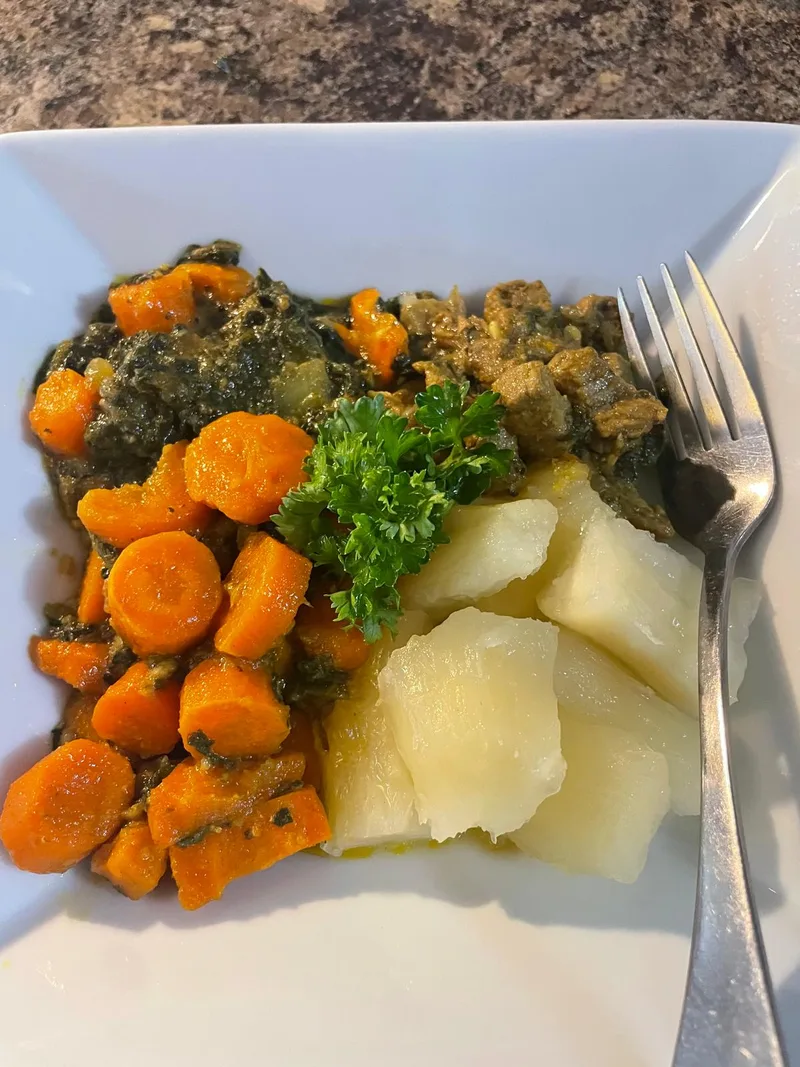
In this article
Short answer
First thing to know, and it throws most people: cassava doesn't have one glycemic index. Everyone hunts for "the number," and it doesn't exist. Published values run from 46 to 94 for the same root. That's a huge spread. The International Tables of Glycemic Index put boiled cassava around 94, which is high; other studies land at 74; and one measurement of boiled Kenyan cassava with salt came in at 46, down in the low range. Same root, results that nearly double. Why? Because the GI depends on the variety, how ripe the root was, how long it cooked, and what you do with it.
That's where the real question hides. What raises your blood sugar isn't the word "cassava." It's the form, the portion, and what sits next to it on the plate.
Preparation changes everything
Boiled cassava is the variable one: depending on variety and cooking, it can drop toward 46 or climb to 94. The processed forms cluster in the high range instead — gari around 92, fufu around 84, tapioca around 79, all above the 70 mark that defines a high GI. Processing doesn't necessarily beat boiled cassava's top figure, but it strips away the chance of a low-GI version: drying, milling and frying make the starch more available, and blood sugar reacts faster. Two things push the other way. Fermentation, for some preparations, softens the response. And cooling: cassava cooked and then left to cool develops resistant starch, a portion of the starch your gut digests more slowly, which blunts the peak.
The number that actually matters is the portion
Glycemic index measures the quality of a carbohydrate, not how much of it you eat. And cassava is carb-dense. So the glycemic load of a normal serving runs high, because people eat a lot of it. That's the difference between a taste and a full plate. A reasonable portion of boiled cassava, next to protein and vegetables, doesn't do what a big bowl of fufu on its own does. Portion usually matters more than the starting GI.
So, cassava and diabetes?
Cassava isn't off-limits when you live with diabetes. But it's a dense starch, so it asks for attention, not avoidance. Three levers. Portion first: a measured serving, not a heaped bowl. Preparation next: boiled rather than fried, and if you like, cooked the day before and reheated, for the resistant starch. And the plate around it: protein, vegetables and a little fat slow absorption and flatten the spike. Cassava flour is gluten-free and can stand in for wheat in some recipes, but it's still a carb-dense starch and its effect on blood sugar isn't automatically gentler — portion decides there too.
One honest note, because it matters. Diabetes is managed with a care team, and your blood sugar gets measured, not guessed from a table. If you're adjusting what you eat around diabetes, do it with your doctor or a professional who knows your file. What's written here helps you understand; it doesn't replace that follow-up.
What I'd tell my aunt
Keep the cassava if it's your cooking. Don't banish it over a number that changes from one study to the next anyway. Serve yourself a normal portion, choose boiled over fried more often, put protein and vegetables next to it, and check your own blood sugar to see how your body responds. That's worth more than any glycemic index you'll find online.
To go further, read our cassava nutrition guide.
Frequently asked questions
What is the glycemic index of cassava?
There's no single value. Published measurements run from 46 to 94 depending on variety, ripeness and cooking. The International Tables place boiled cassava around 94 (high), while one boiled, salted sample measured 46 (low). Preparation and portion matter more than the number on its own.
Does cassava raise blood sugar?
Yes, like any carb-dense starch, especially when it's processed or eaten in large amounts. But how much depends on the form (boiled, fried, gari, tapioca), the portion, and what's on the plate with it. A measured serving of boiled cassava with protein and vegetables has a far gentler effect than a big bowl on its own.
Is cassava good or bad for diabetics?
Neither, in absolute terms. It isn't forbidden, but it's a dense starch that calls for a measured portion, boiled rather than fried preparation, and a plate rounded out with protein and vegetables. Diabetes is managed with your care team, who work from your actual blood-sugar readings.
Do gari, fufu and tapioca have a high glycemic index?
Yes, all three. In studies, gari sits around 92, fufu around 84 and tapioca around 79 — above the 70 threshold for a high GI. Boiled cassava is more variable: it can be lower depending on the variety, but it can also reach 94. Processing mainly removes the chance of a lower-GI version.
How can I lower cassava's effect on blood sugar?
Three moves: a reasonable portion, a boiled rather than fried preparation (and, if you like, cooked and then cooled before reheating, for the resistant starch), and a complete meal with protein, vegetables and a little fat to slow absorption.
Is cassava flour better for blood sugar than wheat flour?
Not automatically. It's gluten-free and can replace wheat in some recipes, but it stays carbohydrate-dense and its glycemic index isn't necessarily lower. What counts is the portion and what you eat alongside it.
Notice
This content is informational and does not replace medical advice. Diabetes is managed with a care team that tracks your blood sugar. For a personalized eating plan adapted to a medical condition, the platform offers consultations with registered dietitian-nutritionists who are members of Quebec's Ordre professionnel des diététistes-nutritionnistes (ODNQ).
Read next
- Cassava: nutrition and benefits
Fibre, carbohydrates, and what cassava provides.
- Does cassava make you gain weight?
Portions, your plate, and what causes weight gain.
- Take the free assessment
2 minutes to take stock of your digestion.
References
- Atkinson FS, Foster-Powell K, Brand-Miller JC. International Tables of Glycemic Index and Glycemic Load Values. (boiled cassava ≈ 94 ± 11)
- Study on the glycemic indices of cassava-derived products (gari ≈ 92, abacha ≈ 85, fufu ≈ 84, tapioca ≈ 79).
- Evidence on resistant starch formed when cooked starchy foods are cooled, and its effect on the glycemic response.
About the author
Juliana Dosy holds an M.Sc. in Nutrition and is a nutrition coach with more than 17 years of experience. She focuses on women's digestive health and translates the science of food without miracle promises, with a particular eye for the foods of Afro-Caribbean cooking.
For personalized support, our ODNQ-registered dietitian-nutritionists see clients in Lachine and online anywhere in Quebec, with insurance receipts: meet our Lachine dietitians.