Does cassava make you gain weight?
Written by Juliana Dosy, M.Sc. Nutrition · Updated
"Juliana, does cassava make you gain weight? People keep telling me to stop eating it if I want to lose weight."
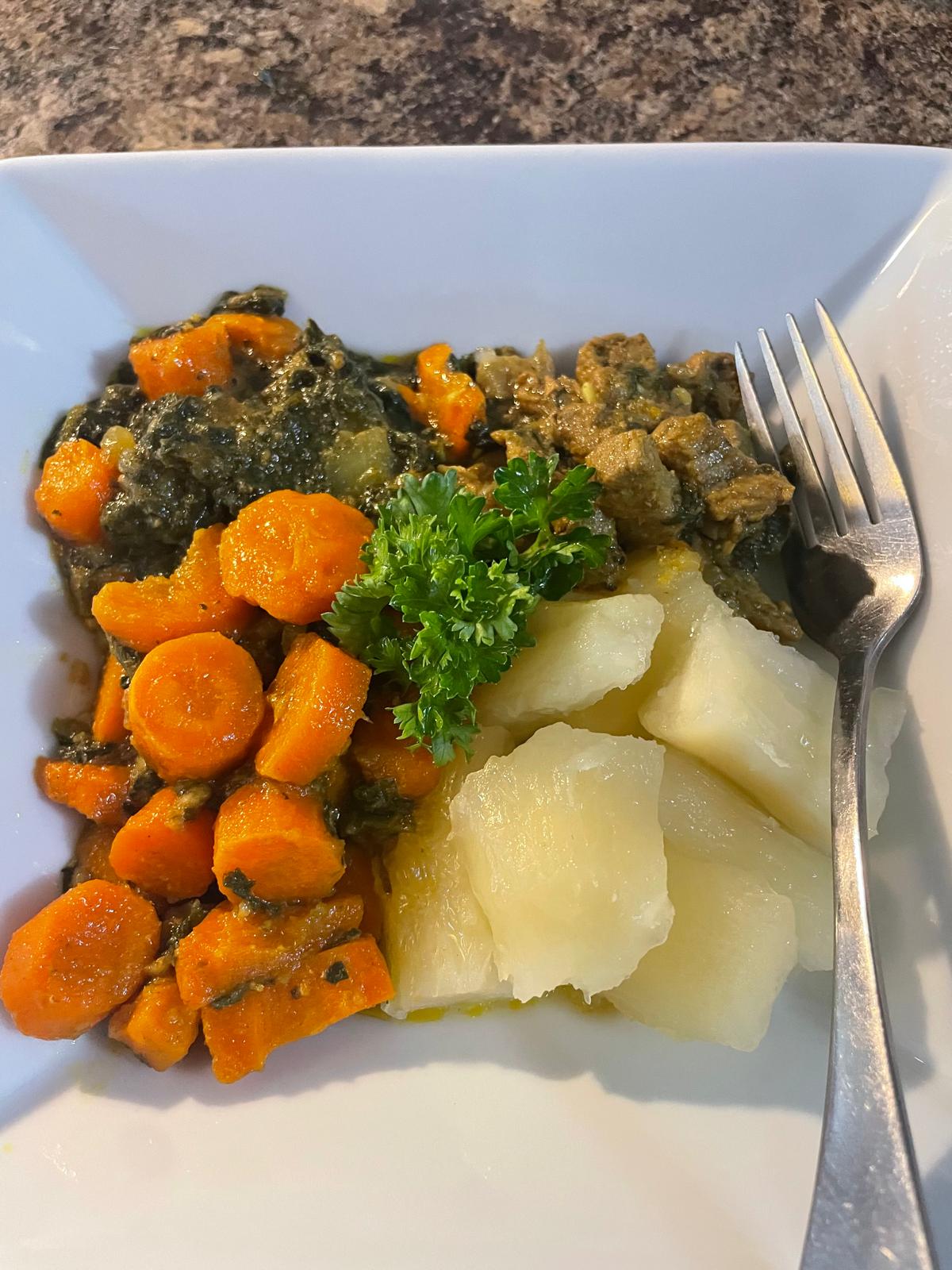
Short answer
No. Cassava, on its own, does not make you gain weight. Weight gain depends on your overall diet, portions, activity level, sleep, and other habits. Learn to give it the right place on your plate instead of banning it.
Cassava is a starch, and starches aren't the enemy
Cassava is a root high in carbohydrates, mostly as starch. Its job is to give your body energy — the fuel your brain, muscles, and whole system need to function. Despite what very restrictive diet trends have suggested, eating starches isn't incompatible with weight loss. The goal isn't to cut carbs. It's to choose your starches, adjust your portions, and build them into complete meals. That's exactly what my VPF plate method does.
The VPF method: look at the whole plate, not one food
A balanced VPF meal comes in three parts: half the plate vegetables, a quarter protein, a quarter fiber-rich starch. Cassava fits comfortably in the starch quarter. For most medium-build, moderately active adults, half a cup to one cup of cooked cassava per meal is a practical guide — adjusted to your energy needs, activity, appetite, and goals.
But what interests me most is the other 75% of the plate. Do you have vegetables? A solid protein source? Or is your meal almost entirely cassava? These are not the same thing. A reasonable portion of cassava in a plate generous with vegetables and protein looks nothing like a big bowl of cassava eaten alone.
If you want help building your own VPF meals around your tastes, preferences, and health needs, that's exactly what my Digestive and Hormonal Health Platform is for. You can start with the free assessment, which shapes the recommendations to your profile. Start my free assessment
Why I want half your plate to be vegetables
Vegetables are one of my favourite weight-management strategies, for a simple reason: they carry a lot of water and fiber for very few calories. They fill the plate and satisfy you without pushing up the calorie count. In nutrition we call this low energy density — a lot of volume for few calories.
That's useful when you're aiming for an energy deficit — the situation where the body spends more energy than it takes in, which is what's needed to lose fat. But I don't want you getting there by eating tiny portions and spending your days hungry. I'd rather you build a colourful, satisfying plate: plenty of vegetables, a good protein, and a reasonable portion of cassava. Losing weight should never mean starving.
Before you blame cassava, look at the whole picture
If your weight is climbing, step back before cutting a single food. Ask the real questions: how often do you eat fast food and fried food? How many sugary drinks, desserts, and chips in a week? Are your portions regularly bigger than your hunger? Do you snack without really being hungry? Do you lean heavily on ready-made meals and ultra-processed foods — those industrial products high in sugar, fat, and salt, whose heavy consumption is linked in the research to higher risk of obesity and metabolic problems?
The overall quality of your diet matters far more than a piece of cassava on your plate. And nutrition is only part of the equation: your activity level, resistance training, time spent sitting, and sleep all weigh in. Adults are generally advised to aim for 7–9 hours of sleep, because chronic shortfall affects appetite, food choices, and the success of any weight-management effort. Cutting cassava while you barely move and sleep poorly doesn't address the real problem.
Cassava has real digestive-health strengths too
Cassava isn't just a source of calories. It provides fiber — about 2g per 110g of boiled cassava, a modest amount that varies by variety and processing, and a reminder of why vegetables need to keep a big place in the meal.
It can also contain resistant starch: a form of starch that partly escapes digestion in the small intestine and reaches the colon, where your gut microbiome can use it. Fermenting it, those bacteria produce short-chain fatty acids like butyrate, which feeds the cells lining the colon. A 2024 study in Food Research International observed prebiotic potential in certain Brazilian cassava cultivars, rich in fiber, resistant starch, and fructooligosaccharides (FOS) — carbohydrates gut bacteria can feed on. A prebiotic is simply food for those good bacteria, not to be confused with a probiotic, which is a live microorganism. Cassava isn't a probiotic, but some of its forms have genuine prebiotic interest.
And not all forms of cassava are equal. Boiled cassava, cooked-then-cooled cassava, attiéké, gari, fufu, tapioca, cassava flour, and fried cassava don't share the same profile. Processing and cooking change the fiber content, the starch structure, the digestion speed, and the glycemic response. Favour whole or minimally processed forms regularly, and vary your preparations.
What if you have diabetes?
Cassava can have a place in a diabetic person's diet, but portion and meal composition are essential here. Cassava affects blood sugar, and its glycemic index varies enormously by variety, cooking, fermentation, and preparation — so you can't say "cassava" has a low or high GI. The response also depends on the amount and the other foods on the plate. My advice stays simple: a reasonable portion of cassava, plenty of vegetables, a good protein source, a balanced meal. I'll devote a full article to this soon: "Cassava, glycemic index, and diabetes: what the science really says."
My verdict
No, cassava doesn't make you gain weight. What shapes your weight is the whole of your habits and your energy balance over time — the balance between the energy you take in and the energy you spend — far more than any single food. You can eat cassava and lose weight. You can never eat it and gain. It all depends on what's around it.
So instead of removing a food that's part of your culture and your enjoyment of eating, learn to give it the right place: half a cup to one cup of cooked cassava, in a plate half-filled with vegetables and a good protein, surrounded by minimally processed foods, regular movement, and enough sleep. That whole-picture view is what builds lasting habits — not fear of cassava.
Want to move from theory to your actual plate, with meals built around your tastes and goals? Start my free assessment
To go further, read our cassava nutrition guide.
Frequently asked questions
Is cassava high in calories?
Cassava is a starch, so it provides more energy than most vegetables — but that doesn't mean it makes you fat. A reasonable portion, alongside plenty of vegetables and a protein, fits perfectly into a weight-loss diet.
How much cassava can I eat to lose weight?
There's no universal portion. As a guide, for many medium-build, moderately active adults: half a cup to one cup of cooked cassava per meal, in the starch quarter of the VPF plate. Adjust to your size, activity, age, and goals.
Can I eat cassava every day?
Yes, but vary your starches. Alternate cassava with sweet potato, yam, legumes, quinoa, barley, or brown rice. Variety brings a wider range of fiber, vitamins, and minerals.
Is it bad to eat cassava at night?
No. No food is more fattening because it's eaten at night. Your overall energy balance is what counts. If your dinner looks like a balanced VPF plate, there's no reason to drop cassava just because it's 7 p.m.
Is boiled cassava better than fried for weight loss?
Generally yes. Fried, cassava absorbs oil and becomes more calorie-dense. Occasional fried cassava isn't forbidden, but for regular eating, favour boiled, roasted, or low-fat homemade preparations.
Is cassava high in fiber?
It provides some — about 2g per 110g boiled — but I wouldn't call all its forms "high in fiber." Highly refined tapioca and cassava starch contain far less. That's why I recommend filling half your plate with vegetables and varying your fiber sources.
Can a diabetic person eat cassava?
Yes. A diabetes diagnosis doesn't mean cutting cassava. Account for the amount, the preparation, and the meal composition, since cassava is high in carbohydrates and its glycemic index varies widely. Avoid a large portion eaten alone; build it into a plate rich in vegetables and protein.
Is cassava gluten-free?
Yes, cassava is naturally gluten-free — a useful option for celiac disease. But "gluten-free" doesn't mean "healthy." A processed cassava product can still be high in sugar and fat, and people with celiac disease should check for cross-contamination.
Should I stop eating cassava to lose weight?
No. Before cutting cassava, look at the whole picture: how many vegetables you eat, your protein, your portion sizes, the place of fried and ultra-processed foods, your activity, your sleep. That's the picture to improve. Cassava can stay on your plate — well prepared, well portioned, well paired.
References
- Mohidin SRNSP, Moshawih S, Hermansyah A, et al.. Cassava (Manihot esculenta Crantz): a systematic review of pharmacological activities, traditional uses, nutritional values, and phytochemistry. Journal of Evidence-Based Integrative Medicine. 2023.
- Mafaldo IM, et al.. Cassava (Manihot esculenta) Brazilian cultivars: chemical composition, prebiotic potential, and effects on the colonic microbiota of celiac individuals. Food Research International. 2024.
- Wen JJ, Li MZ, Nie SP.. Dietary supplementation with resistant starch contributes to intestinal health. Current Opinion in Clinical Nutrition and Metabolic Care. 2023.
- Yuan HC, et al.. Resistant starch types and glycemic response in type 2 diabetes or prediabetes: a systematic review and meta-analysis. Frontiers in Nutrition. 2023.
- Rolls BJ.. Dietary energy density: applying behavioural science to weight management. Nutrition Bulletin. 2017.
- Dicken SJ, Batterham RL.. Ultra-processed food and obesity: what is the evidence?. Current Nutrition Reports. 2024.
- Jakicic JM, et al.. Physical activity and excess body weight and adiposity for adults: ACSM consensus statement. Medicine & Science in Sports & Exercise. 2024.
- Duan L, et al.. Sleep and its impact on the success of weight loss interventions in adults with excess weight: a systematic review. Obesity Reviews. 2026.
About the author
Juliana Dosy, Master of Science in Nutrition with over 17 years of clinical experience and founder of Club NutriChoix. She supports women living with hormonal imbalances — uterine fibroids, endometriosis, PCOS — by combining gut health, estrogen balance, and science-based anti-inflammatory nutrition.
For personalized support through our registered dietitian-nutritionist consultation service, book here: Book an appointment.