Does tapioca make you gain weight?
Written by Juliana Dosy, M.Sc., nutrition coach · Updated
Question received 4 November 2026 — "I love tapioca — bubble tea, pearls in coconut milk. But people keep telling me it's fattening and it's basically just sugar. Is that true?"
In this article
Short answer
So does it make you gain weight? On its own, no. A normal portion of tapioca isn't magically fattening.
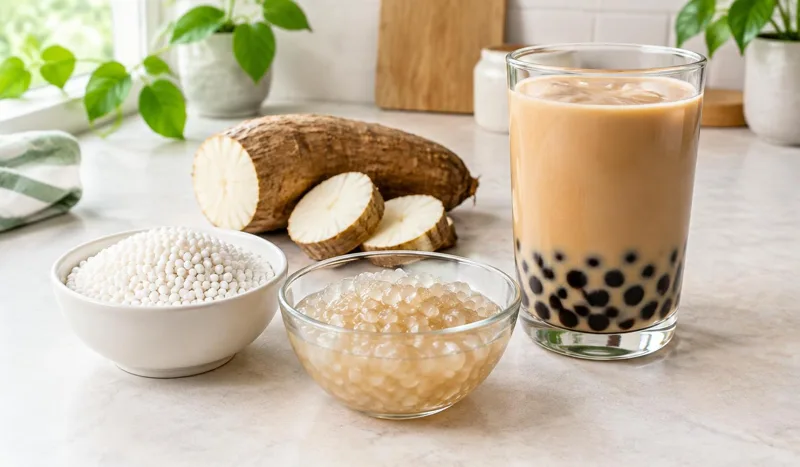
Start with what tapioca actually is, because it settles half the question. Tapioca is starch extracted from the cassava root. Almost nothing else. You wash, grind and separate out the starch, and what's left is a powder — or pearls — that's roughly 90% carbohydrate by dry weight, with very little fibre or protein and few micronutrients. Cooked pearls absorb water, so those proportions do not describe a serving of prepared tapioca. It isn't a "bad" food. It's mainly an energy source, with little fibre or protein.
The real problem isn't the tapioca — it's what's around it
Tapioca is often eaten as sweetened bubble tea, pearls in condensed milk, or pudding with sugar and cream. Calories come from both the starch in the pearls and added sugar and fat. A bubble tea's sugar content varies widely with its size, recipe and chosen sweetness. Consumed frequently in large servings, these drinks may contribute to energy intake above your needs — like other sweet drinks or desserts.
Because it is low in fibre and protein, tapioca alone may be less filling than a meal containing more of those nutrients. Fullness still depends on the serving, recipe and person; we cannot predict that everyone will be hungry an hour later.
On blood sugar, it's one to watch
One small study measured a glycemic index of about 78 for a tapioca preparation, above the 70 threshold for a high GI. This is not a universal value for every starch, pearl or bubble-tea recipe: preparation matters. The carbohydrate portion and the whole meal also affect glucose response. If you live with diabetes, discuss portions and sweetened versions with your care team rather than relying on one number.
What tapioca is actually good for
Pure tapioca is naturally gluten-free, which makes it useful in cooking for people with coeliac disease or gluten sensitivity. With coeliac disease, still check the product's label and the risk of cross-contact. Tapioca starch may fit a low-FODMAP diet at an appropriate serving; that does not mean every tapioca-based recipe is low FODMAP. Milk, sweeteners and other ingredients can change tolerance. If you have IBS and tapioca agrees with you, it can have a place, without a guarantee that it will be better tolerated than other starches.
What I'd tell you
Keep tapioca for pleasure, without demonising it or giving it miracle benefits. It does not cause weight gain by itself: weight change depends on overall intake and many other factors. With bubble tea, the serving, pearls, added sugar and frequency all count together.
To go further, read our cassava nutrition guide.
Frequently asked questions
Does tapioca make you gain weight?
Not by itself. Weight change depends on overall intake and other factors. In bubble tea and desserts, starch in the pearls, added sugar and fat all contribute calories; serving size and frequency matter.
What is the glycemic index of tapioca?
One small study measured a GI of about 78 for a tapioca preparation, which is high. This is not a universal number: products and preparations can produce different responses.
Is tapioca good for diabetics?
It is not automatically off-limits, but it is rich in carbohydrates and low in fibre. The serving, preparation and whole meal matter; discuss choices suited to your diabetes with your care team.
Is tapioca gluten-free?
Yes, pure tapioca is naturally gluten-free. With coeliac disease, still check the product's label and the risk of cross-contact.
Is tapioca hard to digest?
Tolerance varies. Tapioca starch may fit a low-FODMAP diet at an appropriate serving, but milk, sweeteners and other ingredients in a recipe can change tolerance.
Does bubble tea make you gain weight?
Consumed frequently in large servings, it may contribute to energy intake above your needs. Calories come from pearls, sugar and sometimes fat; amounts vary with the recipe, size and chosen sweetness.
Notice
This content is informational and does not replace medical advice. For a personalized eating plan, especially with diabetes, the platform offers consultations with registered dietitian-nutritionists who are members of Quebec's Ordre professionnel des diététistes-nutritionnistes (ODNQ).
Read next
- Cassava, glycemic index and diabetes
Preparation and serving size matter.
- Does cassava make you gain weight?
Portions, your plate, and what causes weight gain.
- Cassava: nutrition and benefits
Fibre, carbohydrates, and what cassava provides.
References
- Glycemic indices of different cassava food preparations. 2016. Link.
- Tapioca Nutrition Facts and Health Benefits (USDA-derived dry pearl data). Link.
- Celiac Disease Foundation. Gluten-Free Foods. Link.
- Tapioca starch: serving-specific FODMAP information. Link.
- Calories and sugars in boba milk tea: implications for obesity risk in Asian Pacific Islanders. Food Science & Nutrition. 2017. Link.
About the author
Juliana Dosy holds an M.Sc. in Nutrition and is a nutrition coach with more than 17 years of experience. She focuses on women's digestive health and translates the science of food without miracle promises, with a particular eye for the foods of Afro-Caribbean cooking.
For personalized support, our ODNQ-registered dietitian-nutritionists see clients in Lachine and online anywhere in Quebec, with insurance receipts: meet our Lachine dietitians.