Expert guide · Juliana Dosy
Fibroids and Diet: Does What You Eat Actually Affect Their Growth?
You just got a fibroid diagnosis, or you suspect one because your period has started lasting closer to ten days than five. The question that comes up almost every time in consultation: can I do anything about this with my plate?
This content is for educational purposes only and does not replace personalized advice from a qualified health professional. Consult your physician or a registered dietitian for any medical condition.
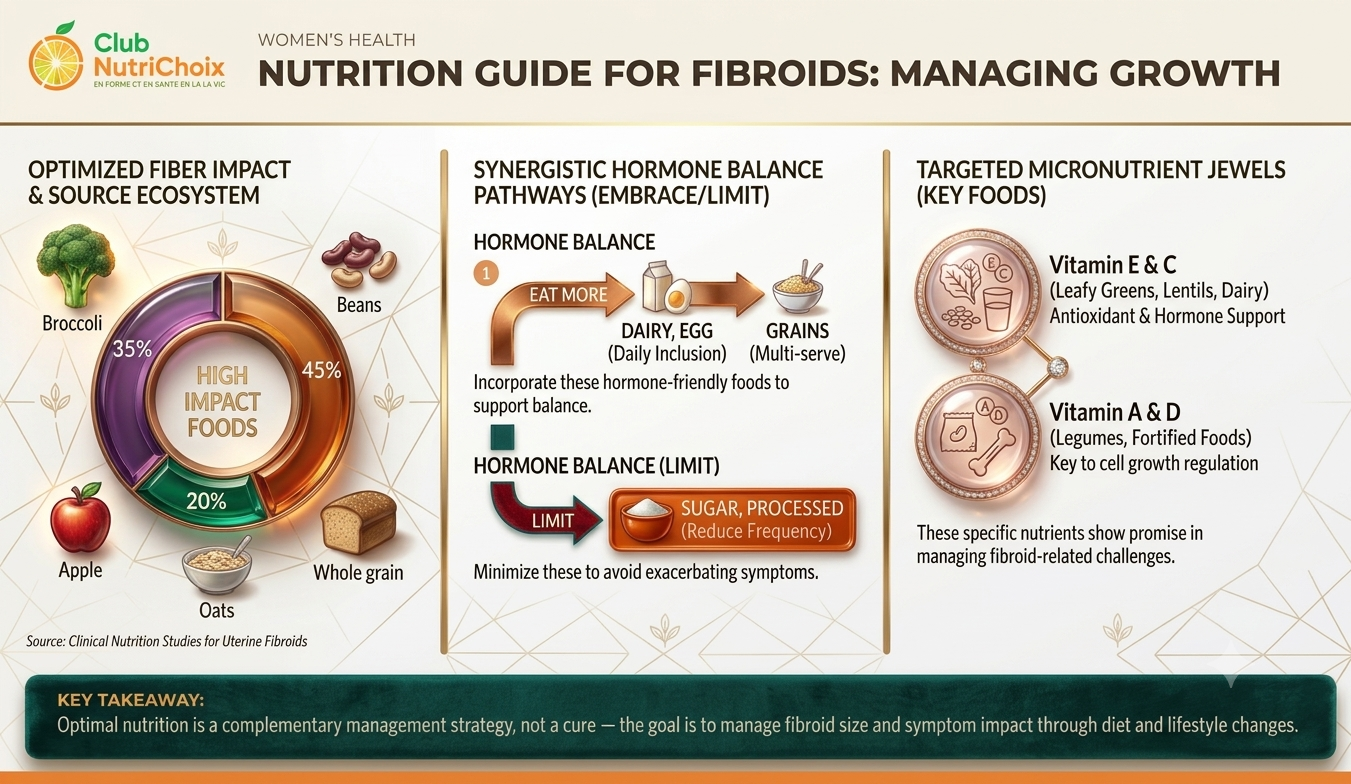
Short answer: yes, partly. Long answer: estrogen, fiber, and one food many women avoid on instinct—even though it probably belongs back on the grocery list.
Why the fibroid grows in the first place
A fibroid is a cluster of muscle cells in the uterine wall that started multiplying on its own. Almost always benign. But the cells that make it up have a very specific appetite: estrogen. The more estrogen circulating in the body, the faster those cells divide. That's why symptoms tend to show up between ages 30 and 40, right when ovarian hormone production peaks, and why fibroids typically shrink after menopause, once that production drops.
That detail changes the entire approach to food. You're not hunting for a miracle ingredient that attacks the fibroid directly. You're influencing how much estrogen is circulating, and how efficiently the body clears it out.
One number to put this in context: one in two Black women will develop a fibroid after age 35. Across all women of reproductive age, regardless of background, the rate climbs to 70 to 80 percent. This isn't a rare thing happening to you alone. It's common, and it's still barely talked about.
Soy is the most misunderstood food on this list
A lot of women avoid soy, worried it "feeds" hormone-sensitive growths. With fibroids, the opposite tends to happen. Soy contains isoflavones — genistein and daidzein — that resemble human estrogen in structure without carrying its full strength. They occupy the hormone receptors instead of the real thing, a bit like someone cutting in line without actually moving it forward. Less room for natural estrogen means less fuel for fibroid cells.
Tofu, edamame, soy milk, tempeh, miso. Not the ultra-processed meat substitutes sitting in the back of the freezer section, but the simple forms that have shown up in Asian kitchens for centuries.
The gut connection nobody mentions
Here's the part almost no one explains: your gut clears excess estrogen through stool. A sluggish digestive system, an out-of-balance gut microbiome, and that estrogen lingers longer than it should, gets reabsorbed, ends up feeding the problem all over again. Fiber — vegetables, fruit, legumes, whole grains — speeds up that clearance. It also feeds the good bacteria in your microbiome, which play an active role in metabolizing that hormonal excess.
A meal without vegetables isn't really a complete meal in this context. Half your plate in vegetables isn't a decorative wellness-magazine suggestion here. To go deeper on gut health, read our IBS nutrition guide.
Purple berries and citrus have a role too
Blueberries, blackberries, raspberries, cranberries, purple grapes. Their pigment carries anti-inflammatory compounds that appear to create a less hospitable environment for cell multiplication. Citrus, lemon especially, works on the same logic. Nothing elaborate required: a handful stirred into morning yogurt, lemon squeezed into warm water before breakfast.
Turmeric earns a spot too, always paired with black pepper so the body can actually absorb it. In a curry, blended into a smoothie, sprinkled over roasted vegetables.
What to cut back on
Regular fried food, fast food, heavy red meat consumption, ultra-processed items with an ingredient list longer than ten lines. Alcohol too, beer in particular, which some studies have linked to faster fibroid growth.
Then there are the endocrine disruptors, less visible but just as present: BHT in certain breakfast cereals, phthalates in various hair relaxers, parabens in skin creams. These substances mimic estrogen once they enter the bloodstream. Reading a shampoo label takes ten extra seconds at the store. Worth it.
What a normal week actually looks like
Soy milk and frozen blueberries at breakfast. Legumes replacing meat two or three times a week at dinner. A handful of nuts instead of a packaged granola bar. Green tea or hibiscus tea in the afternoon instead of a third coffee. None of this requires doubling the grocery budget or overhauling the pantry in one weekend.
What nutrition can't do
An existing fibroid won't disappear because tofu made it into the weekly rotation. Diet influences the hormonal environment and may help slow growth, but it never replaces medical follow-up. Heavy bleeding, worsening pain, chronic fatigue tied to anemia — those are signals to get checked, not something to manage alone through recipe swaps. Our personalized assessment can help you review your digestive and hormonal profile.
Frequently asked questions
Is soy bad for fibroids?
No. Soy isoflavones compete with human estrogen for the same receptors, which tends to reduce, not increase, the hormonal activity that fuels fibroid growth.
What foods should I avoid if I have fibroids?
Frequent fried food, fast food, heavy red meat intake, alcohol — beer especially — and ultra-processed foods containing additives like BHT.
Is there a link between gut health and fibroids?
Yes. A healthy gut clears excess estrogen more efficiently through stool. An imbalanced gut microbiome can lead to that estrogen being reabsorbed instead.
Can diet make a fibroid go away?
No. It can influence the hormonal environment and potentially slow growth, but medical follow-up remains essential for any diagnosed fibroid.
About the author
Related reading: cassava, fiber and culturally-adapted eating.
This article was written by Juliana Dosy, Master of Science in Nutrition with over 17 years of clinical experience and founder of Club NutriChoix. She supports women living with hormonal imbalances — uterine fibroids, endometriosis, PCOS — by combining gut health, estrogen balance, and science-based anti-inflammatory nutrition.
For personalized support, including an assessment through our registered dietitian-nutritionist consultation service, book here: Book an appointment.
Learn more: Our approach · Personalized assessment
Common client questions
Short clinical answers to the questions women with fibroids ask most often: