Going vegetarian or vegan: how do I get enough protein without deficiencies?
Written by Juliana Dosy, M.Sc. Nutrition · Updated
In this article
Short answer
Yes, a well-planned plant-based diet meets protein needs at every life stage. Anchor your plate in whole legumes, tofu, tempeh, whole grains, nuts and seeds — not ultra-processed meat substitutes — and pair iron-rich plants with vitamin C.
Start with the most important thing, which is not protein
The question I received: "Juliana, I want to eat less meat — maybe go fully vegetarian or vegan. Are plant proteins enough? Do I need to combine certain foods? How do I avoid deficiencies? And are all vegetarian foods actually healthy?"
Research on vegetarian and vegan diets is reassuring: a well-planned plant-based diet can meet protein needs at every stage of life (Melina, Craig, Levin, JAND, 2016; Mariotti & Gardner, Nutrients, 2019). What derails people more often is the assumption that eating plant-based automatically means eating well. You can be vegetarian and eat poorly — if your diet runs on ultra-processed meat substitutes, refined starches, and very little produce. The goal is not simply to remove meat. The goal is to build an eating pattern around real plant foods.
Legumes first, everything else after
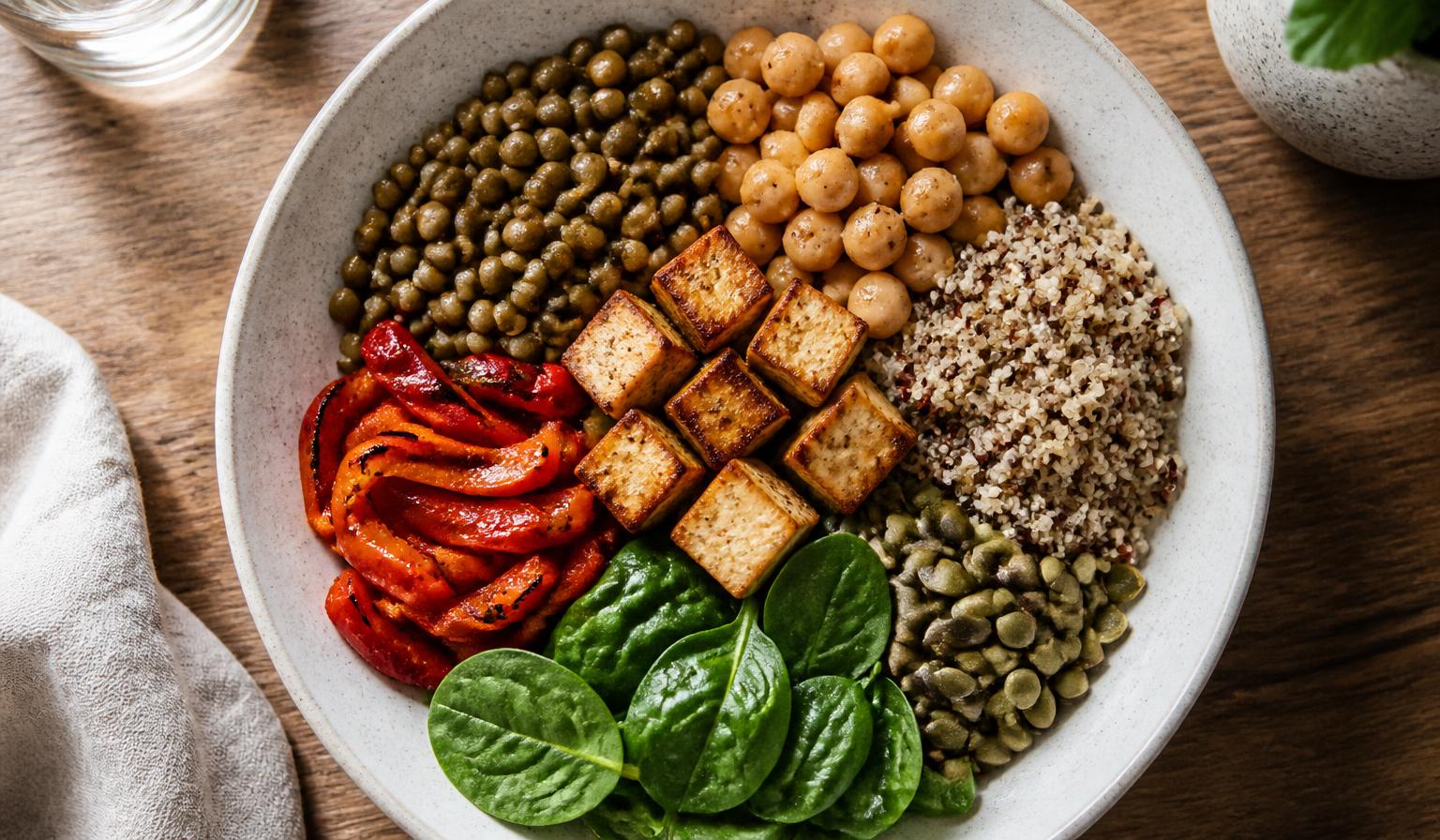
If I had to name one food group to anchor a vegetarian diet, it would be legumes without hesitation. Lentils, chickpeas, black beans, kidney beans, white beans, fava beans — they offer what almost no other plant food does at the same time: substantial protein, fibre, iron, magnesium, potassium, folate, and slow-digesting carbohydrates. They also feed gut bacteria in a way few foods match. Their fermented fibre produces butyrate — a short-chain fatty acid that protects the intestinal wall, supports microbiome diversity, and helps regulate inflammation. Regular legume consumption is associated with lower cardiovascular risk, better blood sugar control, and reduced risk of certain cancers (Reynolds et al., The Lancet, 2019).
Tofu, tempeh, and edamame extend the plant protein toolkit. Whole grains, nuts, and seeds add further amino acid diversity. Building meals from these real ingredients — rather than highly processed alternatives — is what a nutritionally solid vegetarian diet looks like in practice.
The protein-combining myth, corrected
You may have been told that plant proteins are incomplete and must be combined at every meal. Current nutritional science disagrees with that instruction.
Legumes contain all nine essential amino acids, though they are naturally lower in methionine. Whole grains are lower in lysine. Together, across a varied day of eating, they complement each other effectively — and the body draws from a pool of amino acids accumulated over the day, not just from a single meal. Lentils with brown rice at lunch and whole grain bread with hummus at dinner does the job. Variety across the day is the actual requirement.
Iron: the concern that deserves real attention
Iron is the nutrient most worth monitoring on a plant-based diet, and the concern is legitimate. Plant-based iron (non-haem iron) is absorbed less efficiently than iron from meat and fish. Legumes, tofu, tempeh, edamame, pumpkin seeds, cashews, quinoa, dark leafy greens, and fortified cereals all contain meaningful amounts. The absorption gap can be substantially narrowed with one practical strategy: pair iron-rich plant foods with vitamin C at the same meal. Lentils with red peppers, bean chili with tomatoes, hummus with lemon, stir-fried tofu with broccoli — the vitamin C markedly increases iron uptake. Conversely, tea or coffee consumed during or immediately after iron-rich meals reduces absorption; spacing these beverages one to two hours away from meals helps.
Women with heavy periods, diagnosed fibroids, or a known iron deficiency should have ferritin and haemoglobin measured rather than relying on dietary adjustment alone. Individual circumstances matter here.
The ultra-processed trap
The plant-based food market has produced a large number of products — veggie burgers, plant-based sausages, vegan cheeses, imitation chicken — that appear healthy because they contain no meat. Many are not. Several are high in sodium, refined oils, and additives, with less fibre than their branding implies. These work as occasional convenience foods. They should not become the foundation of daily eating.
The best plant proteins remain the ones closest to their natural state: whole legumes, plain tofu, tempeh, edamame, nuts, seeds, and whole grains. The more your plate resembles what these ingredients look like before industrial processing, the better — for your gut bacteria, your blood sugar, your cardiovascular system, and your long-term satiety.
A note on digestive adjustment
Legumes sometimes cause gas and bloating when someone is new to eating them or has IBS. The solution is generally gradual adaptation, not elimination. Start with small portions, increase slowly, rinse canned legumes thoroughly, soak dried ones before cooking. The gut microbiome needs a few weeks to adjust. For people with IBS, some legumes and portion sizes are better tolerated than others within a low-FODMAP framework supervised by a nutrition professional.
Frequently asked questions
Are plant proteins as effective as animal proteins for muscle building?
Yes, with adequate total intake spread across the day. Varied plant protein sources — legumes, soy foods, whole grains, nuts, seeds — together provide all essential amino acids. The key is variety, not combining everything at one meal.
Do I need to combine plant proteins at every meal?
No. Current evidence shows that varying plant protein sources throughout the day is sufficient. Your body maintains an amino acid pool it draws from across the full day.
What are the best plant sources of iron?
Lentils, chickpeas, black beans, tofu, tempeh, edamame, pumpkin seeds, cashews, quinoa, dark leafy greens, and fortified cereals are all meaningful sources. Always pair them with vitamin C to improve absorption.
Are veggie burgers and meat substitutes healthy?
Occasionally, yes. As a daily staple, generally no. Many commercial meat substitutes are ultra-processed, high in sodium and refined oils, and lower in fibre than whole-food equivalents. Legumes, tofu, and tempeh are better everyday choices.
Should I take supplements on a vegetarian or vegan diet?
Vitamin B12 supplementation is essential for vegans. Iron, vitamin D, and zinc are worth monitoring through blood work. Algae-based omega-3 supplements are well-supported for those avoiding fish. A healthcare professional can advise based on your individual results.
References
- Melina V, Craig WJ, Levin S.. Position of the Academy of Nutrition and Dietetics: Vegetarian Diets. JAND. 2016.
- Mariotti F, Gardner CD.. Dietary protein and amino acids in vegetarian diets. Nutrients. 2019.
- Willett W, et al.. Food in the Anthropocene: the EAT-Lancet Commission. The Lancet. 2019.
- Reynolds A, et al.. Carbohydrate quality and human health. The Lancet. 2019.
- Satija A, Hu FB.. Plant-based diets and cardiovascular health. Trends in Cardiovascular Medicine. 2018.
- Chen Z, et al.. Ultra-processed foods and health outcomes: umbrella review. The BMJ. 2024.
- Petry N, et al.. Vitamin C and iron absorption from vegetarian meals. British Journal of Nutrition.
- U.S. Dietary Guidelines Advisory Committee.. Scientific Report. 2025.
About the author
Juliana Dosy, M.Sc. Nutrition, has over 17 years of clinical experience and founded Club NutriChoix. She explains digestive health, nutrition, and hormonal health using scientific evidence, without miracle claims.
For personalized support, our ODNQ-registered dietitian-nutritionists see clients in Lachine and online anywhere in Quebec, with insurance receipts: meet our Lachine dietitians.