What are the top 3 protein sources for fat loss, muscle and gut health?
Written by Juliana Dosy, M.Sc. Nutrition · Updated
In this article
Short answer
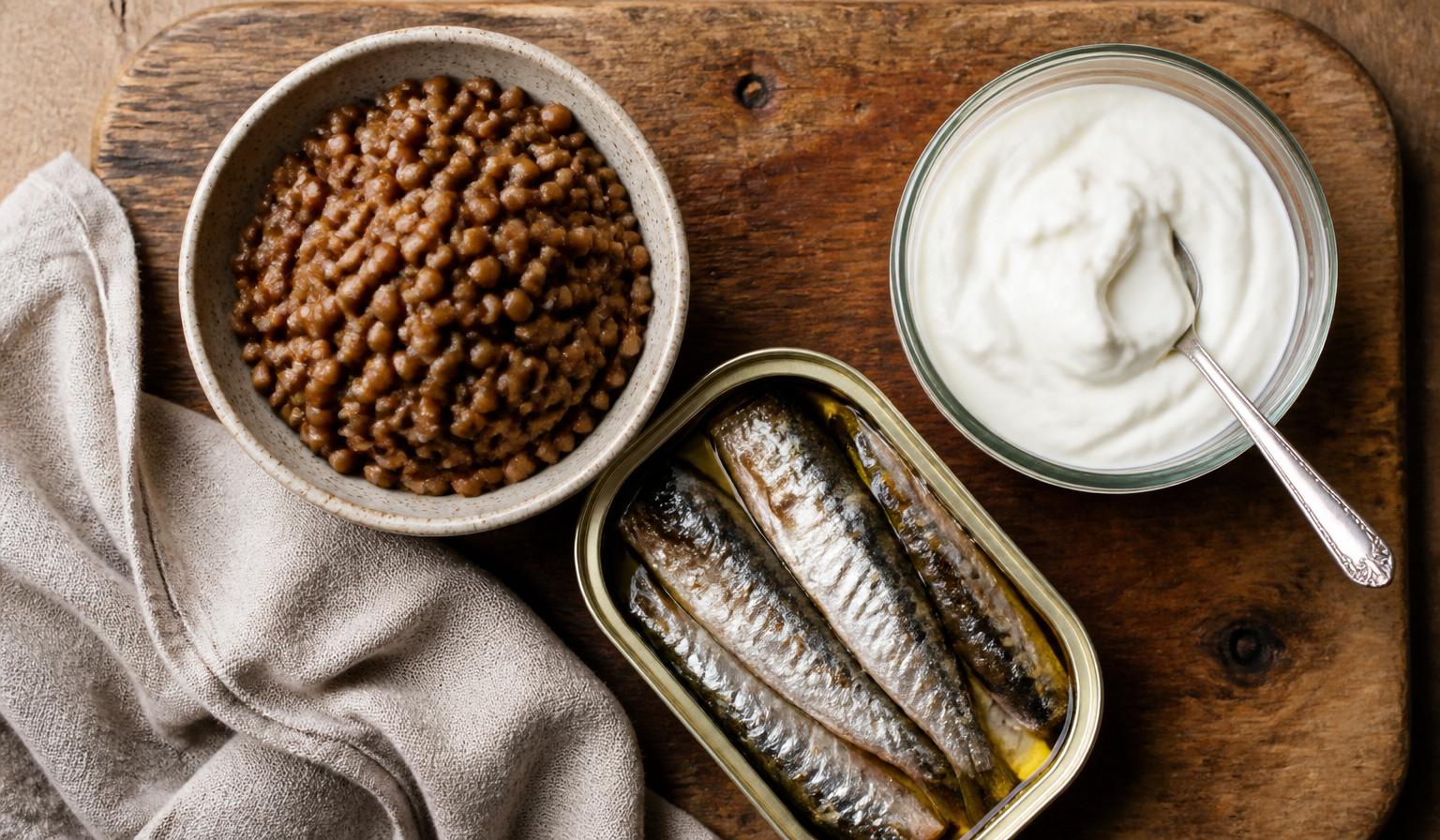
Legumes, omega-3-rich fatty fish, and plain Greek yogurt. Together they support muscle, feed the gut microbiome, calm inflammation, and protect cardiovascular health — more than chicken breast or protein shakes alone.
The answer is not chicken breast
The question I received: "Juliana, if I want to lose fat without losing muscle — while taking care of my gut, protecting my heart, and reducing my risk of chronic disease — what are the best protein sources to focus on?"
Chicken is fine. So are eggs, cottage cheese, and tofu. But if I had to rank proteins by their overall contribution to long-term health — not just muscle maintenance — three categories consistently pull ahead. They reduce inflammation, feed the gut microbiome, support cardiovascular health, and in the literature they are linked with lower risk of several chronic diseases when they regularly replace more processed protein sources.
1. Legumes — the most underestimated protein in the grocery store
Lentils, chickpeas, black beans, kidney beans, white beans, fava beans. Most women I work with eat them once a week, if that. The research suggests three times a week as a minimum — and more if your digestive system handles them well.
What makes legumes exceptional is the combination in a single food: substantial plant protein alongside enormous amounts of fibre, slow-digesting carbohydrates that don't spike blood sugar, iron, magnesium, folate, and potassium — with almost no saturated fat. Unlike most animal proteins, they actively feed beneficial gut bacteria. When those bacteria ferment the fibre, they produce short-chain fatty acids including butyrate, which helps protect the intestinal wall and reduce chronic inflammation. Regular legume consumption is linked to better cholesterol control, improved blood sugar management, and lower risk of cardiovascular disease and certain cancers across multiple large studies (Reynolds et al., The Lancet, 2019; McRae, British Journal of Nutrition, 2018).
For fat loss specifically, legumes are hard to beat: the fibre-protein combination extends satiety and reduces cravings more reliably than most protein bars or shakes.
If legumes cause digestive discomfort, increase portions gradually. Rinse canned versions thoroughly, soak dried legumes before cooking, and maintain good hydration. Your gut microbiome needs several weeks to adapt — give it that time before concluding they don't work for you.
2. Omega-3-rich fatty fish — protein that also protects heart and brain
Salmon, sardines, mackerel, herring, trout, anchovies. These are complete, high-quality proteins — but their real advantage is EPA and DHA, the two forms of omega-3 the body uses directly without any conversion step. The evidence is extensive: better cardiovascular outcomes, lower triglycerides, reduced inflammatory signalling, and support for brain and eye function (Calder, Nutrients, 2020). Research also suggests that adequate omega-3 intake, combined with resistance training, may help preserve muscle mass with age — which matters considerably for women over 40 (Phillips et al., AJCN, 2023). Two servings of fatty fish per week is the target most major dietary guidelines align on.
Sardines deserve a specific mention. They sit at the bottom of the food chain and accumulate far less mercury than large predatory fish, while delivering protein, calcium from the bones, vitamin D, B12, and selenium in one affordable can. They are not glamorous. They are extremely effective.
3. Plain Greek yogurt — the most practical protein upgrade
A serving of Greek yogurt typically provides 15 to 20 grams of protein. Its predominant protein is casein — slowly digested, which sustains satiety over hours and supports muscle protein synthesis between meals. It works well at breakfast, as a snack, or after exercise. It also provides calcium, phosphorus, vitamin B12, and depending on the product, live bacterial cultures that may contribute to gut microbiome diversity (ISAPP, 2023–2024).
Choose plain and unsweetened. A flavoured yogurt with 18 grams of added sugar is a different product entirely. Add berries, nuts, or ground seeds to increase the nutritional value further.
Protein is one part of the plate
Even the best protein sources cannot do their full work in an unbalanced meal. Filling half the plate with vegetables, choosing fibre-rich starches, limiting ultra-processed foods, sleeping enough, and staying active shape the outcome as much as protein selection does. What changes with these three choices is the quality of the foundation — proteins that do more than one job while they're in your body.
Frequently asked questions
What is the best protein for women who want to lose fat?
Legumes consistently rank highly for fat loss because their fibre-protein combination extends satiety and reduces cravings, while also moderating glycemic response. Fatty fish and Greek yogurt follow closely, particularly for preserving muscle during a caloric deficit.
How much protein per day does a woman need?
Current recommendations for active adult women land between 1.2 and 1.6 g of protein per kilogram of body weight per day, spread across the day in 20–30 g doses. Women over 40 or in a caloric deficit generally benefit from the higher end of that range to preserve muscle.
Do I need animal protein to build muscle?
No. A well-planned plant protein intake — with sufficient total protein spread across the day — can support muscle maintenance and growth. Legumes, soy foods, and whole grains together cover all essential amino acids.
Are legumes good for gut health?
Yes. Legumes are among the best-studied prebiotic foods. Their fibre is fermented by gut bacteria to produce short-chain fatty acids, particularly butyrate, which supports the intestinal wall and helps modulate inflammatory signalling.
How much Greek yogurt is a reasonable daily serving?
A 150–200 g serving of plain Greek yogurt provides 15–20 g of protein and fits comfortably within a balanced day. Choose plain, unsweetened varieties; treat flavoured versions as an occasional choice.
Can I get omega-3 from plant foods instead of fish?
Flaxseed, chia seeds and walnuts provide ALA — a form of omega-3 the body converts to EPA and DHA at a low rate. Fatty fish remains the most reliable source of biologically active omega-3. Algae-based supplements are an effective alternative for those who avoid fish.
References
- Reynolds A, et al.. Carbohydrate quality and human health. The Lancet. 2019.
- McRae MP.. Health benefits of dietary pulses. British Journal of Nutrition. 2018.
- Marinangeli CPF, Jones PJH.. Pulse consumption and human health. Applied Physiology, Nutrition, and Metabolism. 2024.
- Calder PC.. Omega-3 fatty acids and inflammatory processes. Nutrients. 2020.
- Phillips SM, et al.. Protein requirements and muscle health across the lifespan. American Journal of Clinical Nutrition. 2023.
- American Heart Association.. 2021 Dietary Guidance to Improve Cardiovascular Health. Circulation. 2021.
- ISAPP.. Consensus statements on probiotics and fermented foods. 2023–2024.
- U.S. Dietary Guidelines Advisory Committee.. Scientific Report. 2025.
- Willett W, et al.. Food in the Anthropocene: the EAT-Lancet Commission. The Lancet. 2019.
About the author
Juliana Dosy, M.Sc. Nutrition, has over 17 years of clinical experience and founded Club NutriChoix. She explains digestive health, nutrition, and hormonal health using scientific evidence, without miracle claims.
For personalized support, our ODNQ-registered dietitian-nutritionists see clients in Lachine and online anywhere in Quebec, with insurance receipts: meet our Lachine dietitians.